2026-10-19 ·
Complete Guide to Black water cleanup in Roseville, Michigan
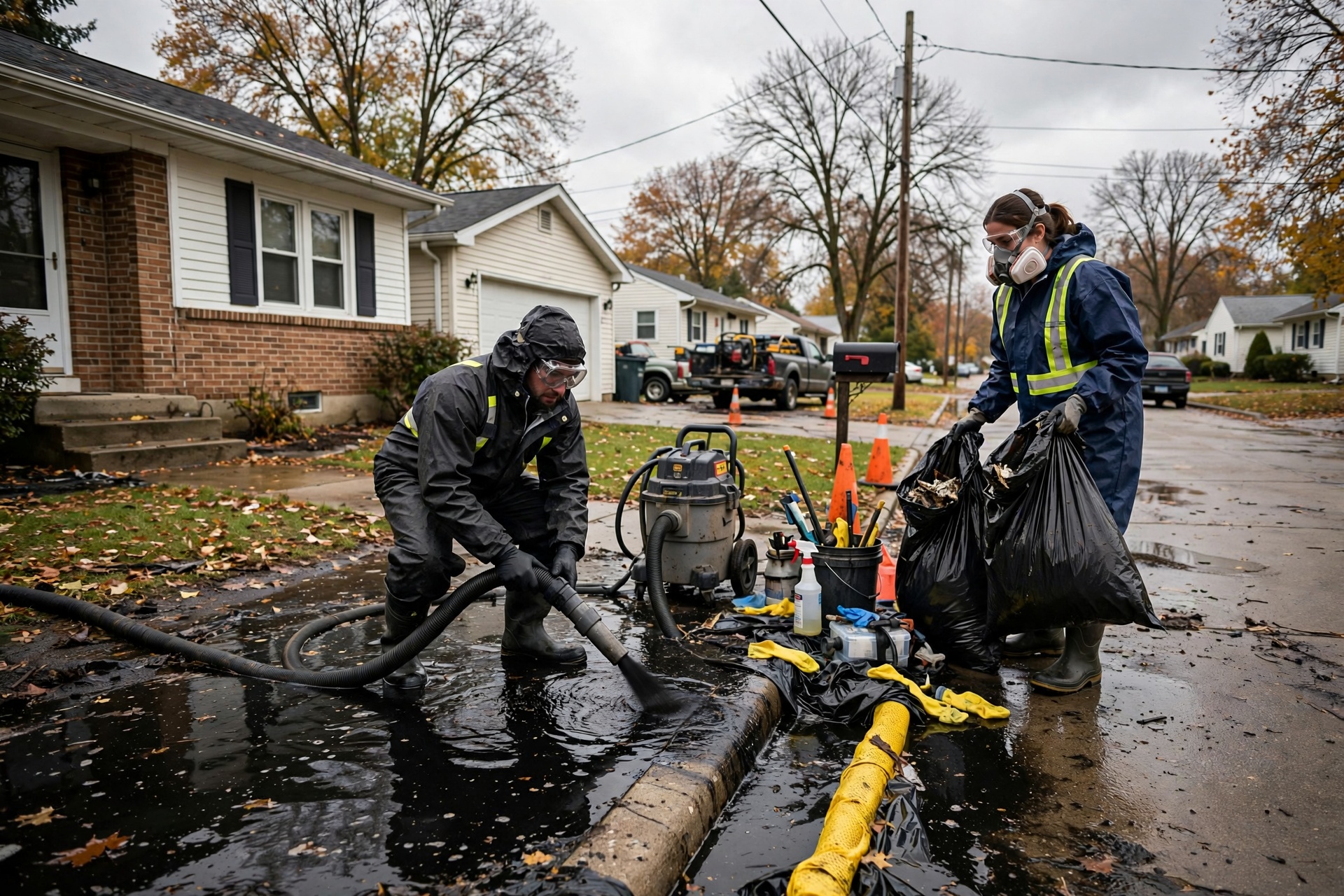
Black water cleanup in Roseville, Michigan typically takes 3 to 7 days from initial extraction through final drying and sanitization when handled by trained crews using commercial equipment. Homes near the Eastpointe border area and along Common Road often see backups triggered by aging sewer lines that struggle during heavy spring rains or winter thaws. The humid continental climate brings cold winters that can freeze pipes and warm summers that accelerate mold growth once water enters basements.
Understanding Black Water Sources in Macomb County
Black water originates from sewage backups, septic overflows or floodwater mixed with contaminants. In Roseville properties built before 1970, clay sewer lines running under Veterans Memorial Park neighborhoods crack from ground movement and tree roots, allowing waste to enter basements. Nearby cities such as Warren and Sterling Heights share similar aging infrastructure that contributes to cross-contamination during heavy storms. Residents near the Roseville Civic Center frequently report backups after combined sewer overflows push material into lower levels.
Immediate Health and Structural Concerns
Exposure to black water introduces bacteria, viruses and parasites that remain active for weeks in moist conditions. Roseville homes with finished basements near Downtown Roseville face rapid drywall saturation that requires full removal rather than simple drying. The county's clay-heavy soils hold moisture longer than sandy areas, extending the time needed for structural drying and dehumidification after extraction. Prompt containment prevents odors from migrating through HVAC systems common in Eastpointe border homes.
Step-by-Step Extraction and Removal Process
Trained crews begin by isolating the affected zone and pumping standing water using truck-mounted units rated for 500 gallons per minute. Sewage extraction and removal follows with removal of saturated carpet, padding and insulation that cannot be salvaged. Technicians then apply EPA-registered disinfectants to all hard surfaces and treat porous materials where possible. Final clearance testing confirms contaminant levels meet safety standards before reconstruction begins.
Drying Challenges Specific to Roseville Housing Stock
Many Roseville residences feature concrete block foundations that wick moisture upward, requiring perimeter baseboard removal and targeted air movers. The area's warm summer humidity often exceeds 70 percent, slowing evaporation and demanding industrial dehumidifiers running 24 hours daily. Crews monitor moisture meters at multiple depths in subfloors to ensure readings drop below 12 percent before closing walls. Properties along the Gratiot Corridor experience additional airflow restrictions from dense landscaping that traps humidity around foundations.
When to Call Local Professionals
Homeowners should contact 24/7 emergency service at 16129 Common Rd immediately upon discovering sewage in living spaces rather than attempting DIY removal. Black water cleanup crews familiar with Macomb County codes handle disposal of contaminated materials at approved facilities and coordinate with local inspectors. Delaying professional response allows bacteria to migrate into wall cavities, increasing both health risks and restoration costs in older Roseville stock. For deeper reading on related procedures, see the complete guide to sewage extraction and removal in Roseville, Michigan.