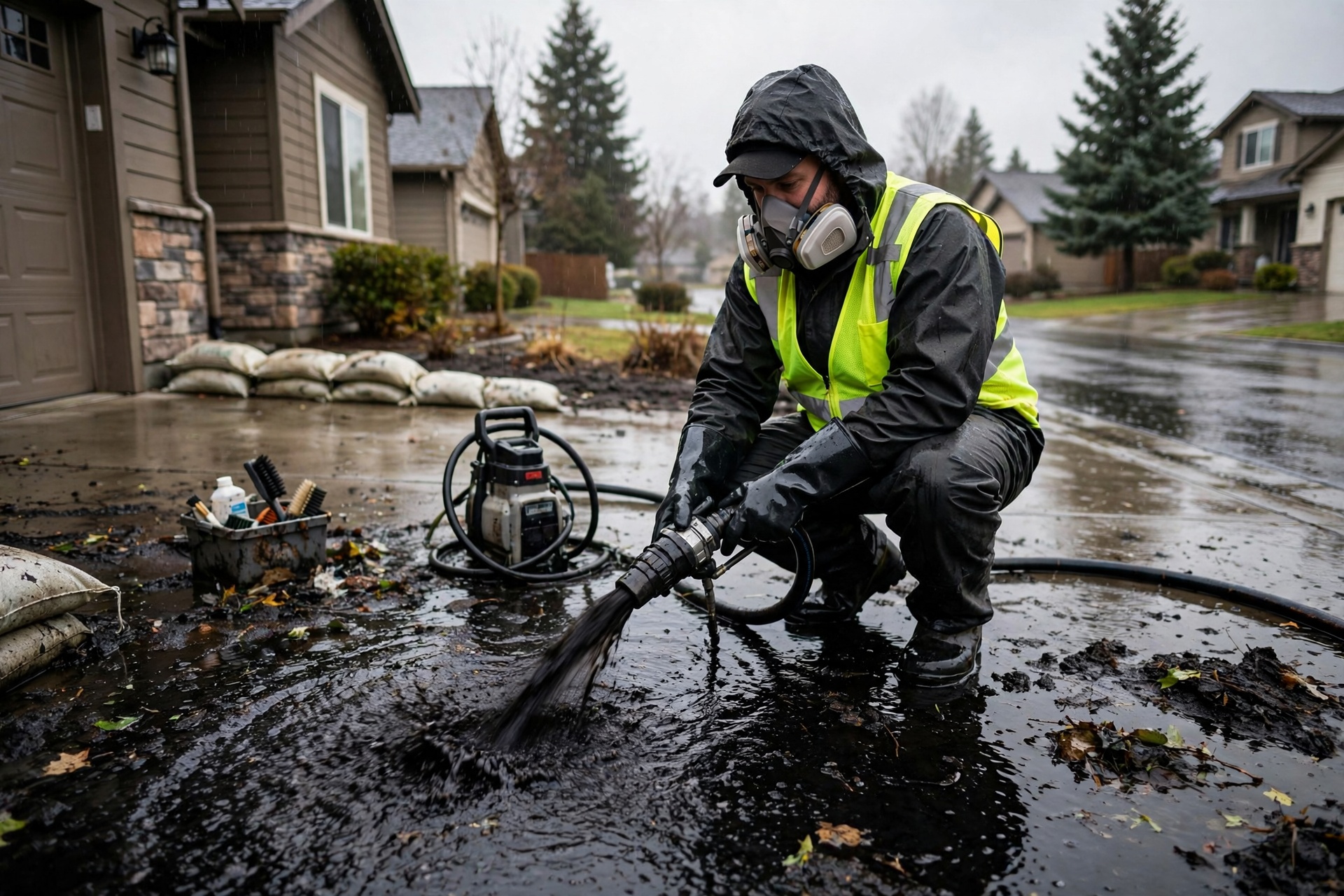
Black water from sewage backups carries pathogens and requires full containment and disposal protocols that differ from gray water jobs. In Roseville's older housing stock along the Eastpointe border and in Downtown Roseville, many homes built before 1970 still have clay sewer lines that crack during the freeze-thaw cycles common in Macomb County's humid continental winters. Once a line fails, contaminated water migrates under slab foundations or into finished basements faster than in newer construction, often reaching wall cavities within hours. Crews must remove and dispose of affected porous materials rather than attempting salvage.
Summer humidity in the region slows drying times after extraction, while winter jobs face the added challenge of frozen ground making exterior access trenches harder to dig. Properties near Veterans Memorial Park and along Common Road frequently report backups tied to municipal main surcharges during heavy rain events that overwhelm aging infrastructure shared with Warren and Sterling Heights. Proper PPE, negative air machines, and EPA-registered disinfectants rated for Category 3 water are mandatory on every site.
Homeowners sometimes attempt to handle initial extraction themselves, which spreads contamination into HVAC returns and increases the scope. Professional teams isolate the affected zone immediately, document moisture readings at multiple depths, and coordinate with local waste haulers for proper transport of solids and liquids out of Macomb County.
Technician insight
In Roseville the thing that catches most people out with black water cleanup is how quickly contamination travels under the slab in pre-1970 homes along the Eastpointe border once clay pipes crack during a hard freeze.
Eastpointe Border Backup
A homeowner near the Eastpointe border reported sewage rising in the basement after a January thaw. We found a cracked clay line under the slab that had allowed black water to reach the finished family room. Extraction, removal of two walls of drywall, and full disinfection were completed within 48 hours so the family could return without lingering odors.
Black Water Cleanup Services We Offer
✓Basement Black Water Extraction
Rapid removal of contaminated standing water from lower levels using truck-mounted pumps suited to Roseville's older slab and crawlspace homes.
✓Contaminated Drywall and Insulation Removal
Cutting out and bagging saturated wall materials up to the flood line to prevent hidden mold growth in Macomb County humidity.
✓Sewage Odor Neutralization
Application of professional-grade oxidizers and sealants to eliminate persistent smells in finished basements near the Eastpointe border.
✓Hard Surface Disinfection
Thorough cleaning and antimicrobial treatment of concrete, tile, and wood floors after sewage intrusion in Downtown Roseville properties.
✓Carpet and Pad Disposal
Safe removal and certified disposal of flooring that cannot be salvaged following a black water event.
Black Water Cleanup Cost in Roseville, MI
| Service | Typical Range | What Affects It |
|---|---|---|
| Small basement extraction under 200 sq ft | $900–$1,600 | Higher in winter when lines are frozen |
| Full room drywall and insulation removal | $1,200–$2,400 | Varies with ceiling height and access |
| Odor treatment after backup | $350–$650 | Often combined with drying |
| Emergency after-hours response | Included | No additional fee for nights or weekends |
Pricing confirmed on-site before work begins. Call 24/7 for immediate dispatch.
How it works
- 1
Site Assessment
Technicians arrive within hours, identify the source, test for hidden moisture, and map contamination boundaries.
- 2
Containment And Extraction
Negative air and physical barriers are set while pumps and vacuums remove standing black water.
- 3
Material Removal And Cleaning
Porous items are cut out, surfaces are scrubbed with EPA-rated agents, and waste is hauled for proper disposal.
- 4
Drying And Verification
Industrial drying equipment runs until moisture readings meet industry standards, followed by final clearance testing.
Pricing
Costs depend on square footage affected, depth of contamination, and whether structural materials must be removed.