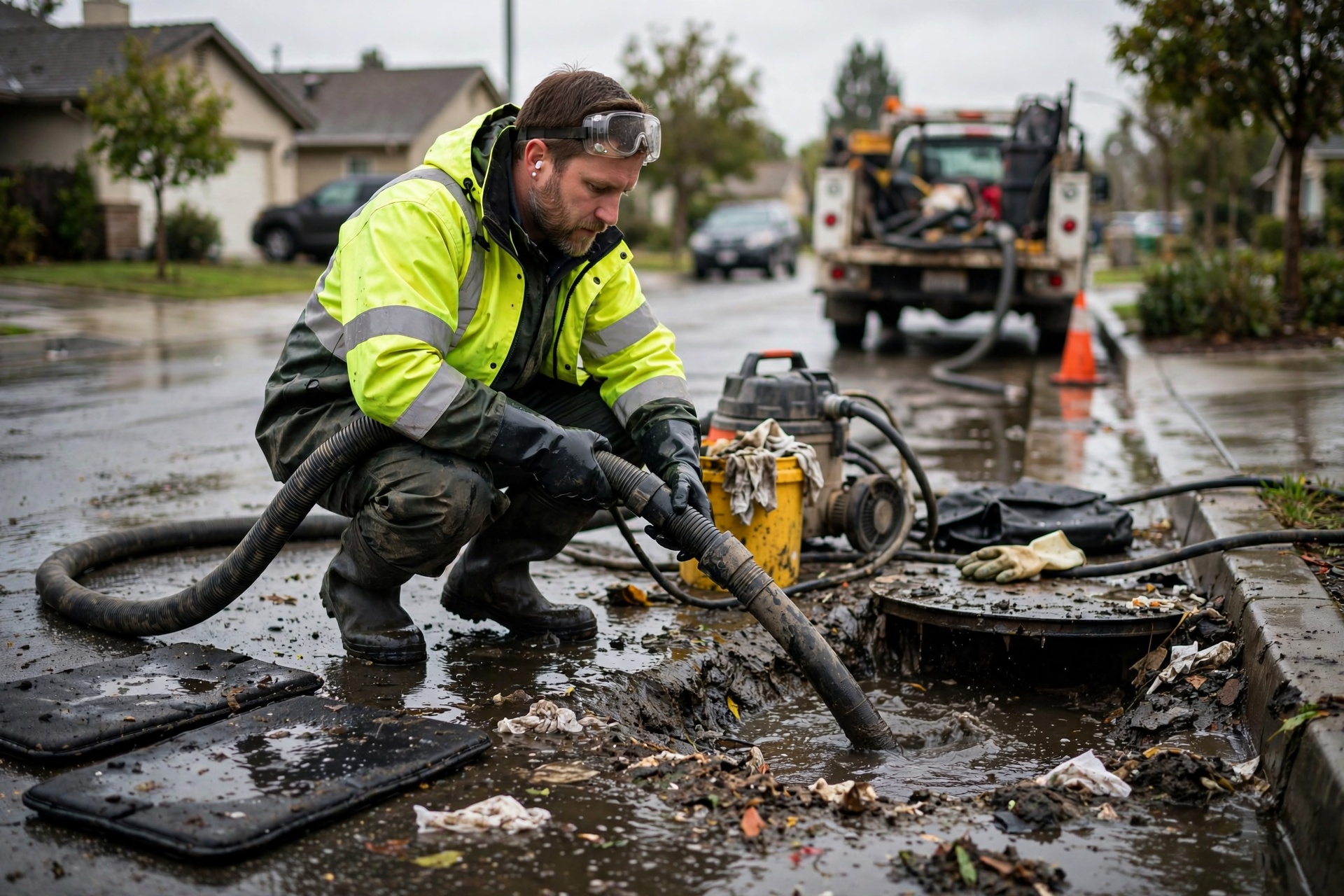
Roseville's older housing stock along Common Road and in Downtown Roseville often features clay or cast-iron sewer lines installed decades ago that crack or separate when the ground shifts during freeze-thaw cycles common to Macomb County's humid continental winters. When a main line backs up, raw sewage can reach finished basements quickly because many lots sit on flat terrain with limited natural drainage toward the Eastpointe border. Technicians must first isolate the affected plumbing run before extraction begins, or contaminated water migrates under walls and into neighboring properties.
Warm summer humidity accelerates bacterial growth on porous concrete floors and joists after a backup, so drying must start within hours to prevent hidden mold colonies that later affect air quality in tightly sealed 1950s-era homes. Crews use moisture meters on subfloors and behind baseboards rather than relying on surface readings alone, especially in properties near Veterans Memorial Park where high water tables after heavy rain compound the issue. Disposal follows Macomb County health department guidelines for biohazard waste to avoid fines during transport to approved facilities.
Nearby cities such as Warren and Sterling Heights share the same glacial till soil that holds moisture, so jobs crossing municipal lines require coordination on where the blockage actually sits in the shared sewer main. Homeowners sometimes attempt their own cleanouts with rented equipment, which can push debris farther downstream and turn a localized Roseville blockage into a multi-property problem. Professional assessment includes camera inspection of the line from the cleanout at the 16129 Common Rd base outward before any restoration work starts.
Technician insight
In Roseville, the thing that catches most people out with emergency sewage cleanup is the way older cast-iron lines under flat lots near Veterans Memorial Park stay partially blocked after the main event. A quick pump-out leaves residue that refills the basement the next heavy rain because the line was never fully cleared from the street side. We always run the camera past the property line before we leave.
Downtown Roseville Backup After Winter Thaw
A homeowner on Common Road near the Civic Center called after a sudden thaw sent meltwater into an already compromised clay sewer line. Camera inspection showed a separated joint two houses upstream. Crews isolated the run, extracted sewage from the finished basement, removed saturated carpet, and dried the concrete slab over three days. The line was repaired from the exterior cleanout without excavation inside the home.
Emergency Sewage Cleanup Services We Offer
✓Basement Sewage Extraction
Removes standing sewage from below-grade spaces common in Roseville's older split-level homes before it migrates into finished areas.
✓Sewer Line Backup Removal
Clears and extracts waste from main line clogs caused by tree roots or grease in Macomb County clay soil lines.
✓Contaminated Carpet and Pad Removal
Safely discards saturated flooring materials that trap bacteria after backups near the Eastpointe border.
✓Odor Source Neutralization
Treats porous surfaces in crawl spaces and behind drywall to eliminate sewage smells that linger in humid summer conditions.
✓Structural Drying and Dehumidification
Uses industrial equipment sized for Macomb County winter moisture loads to prevent secondary mold growth in concrete basements.
Emergency Sewage Cleanup Cost in Roseville, MI
| Service | Typical Range | What Affects It |
|---|---|---|
| Initial Assessment And Camera Inspection | $150–$300 | Includes exterior cleanout access; higher if multiple laterals must be scoped. |
| Basement Sewage Extraction | $800–$2,200 | Varies with water depth and square footage in older Roseville basements. |
| Contaminated Material Removal | $400–$900 | Carpet, pad, and affected drywall; disposal fees included. |
| Full Structural Drying | $600–$1,500 | Equipment rental duration driven by winter humidity levels. |
Pricing confirmed on-site before work begins. Call 24/7 for immediate dispatch.
How it works
- 1
Site Assessment
Technician inspects the property and traces the backup source using camera equipment from the exterior cleanout.
- 2
Containment Setup
Plastic barriers and negative air machines isolate the affected zone to protect unaffected rooms in the home.
- 3
Extraction And Removal
Pumps and wet vacuums remove liquid waste while bagging solid debris for county-approved disposal.
- 4
Cleaning And Drying
Antimicrobial application followed by targeted drying of floors, walls, and substructures.
- 5
Final Verification
Moisture readings and odor checks confirm the space meets pre-loss conditions before turnover.
Pricing
Upfront quote provided after on-site assessment; final cost depends on volume, depth of contamination, and drying time required.