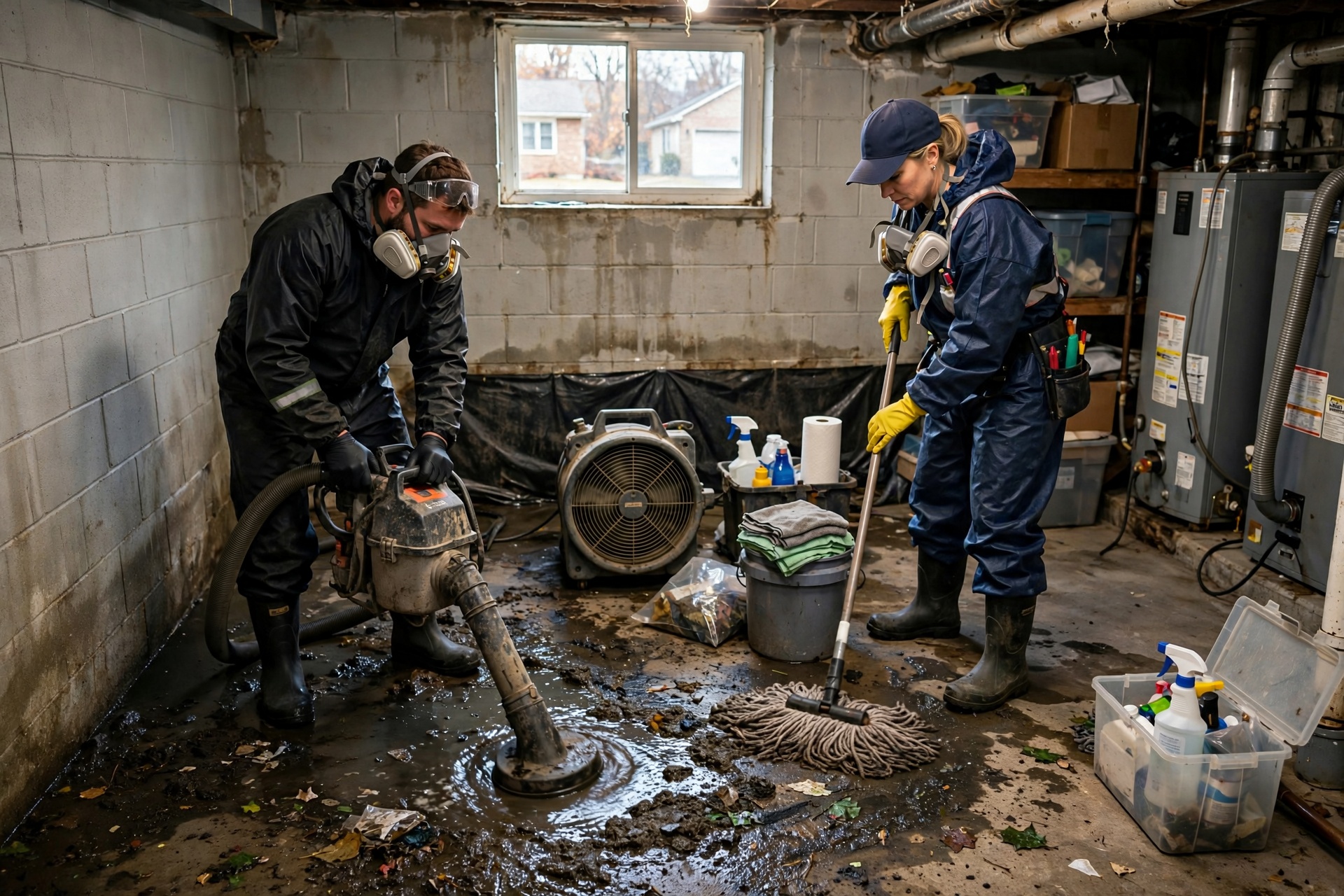
Common Road District sits along the spine of Common Road in Roseville's 48066 zip, a stretch of mostly 1950s-1970s ranch and Cape Cod homes with clay and cast-iron laterals that crack from decades of freeze-thaw cycles. When a main line backs up, waste often surfaces in basements because many lots slope toward the street without modern sump tie-ins. Roseville Sewage Cleanup Co. stages trucks at 16129 Common Rd so crews reach these blocks in minutes instead of fighting traffic from Warren or Sterling Heights.
Winters here bring prolonged sub-freezing stretches that push groundwater into joints already stressed by the area's heavy clay soils. Summer storms dump water faster than the combined sanitary-storm system can handle near the Eastpointe border, sending sewage through floor drains on Gratiot and 13 Mile side streets. Our trucks carry jetters sized for the four- and six-inch lines common in these neighborhoods and know which manholes sit under the parkway trees that line most Common Road District yards.
Access on narrower lots means we often work from the street with long hoses rather than driving equipment onto driveways. Homeowners on streets like Barkman and Meier frequently report roots from old silver maples invading laterals, a pattern we see every spring after the ground thaws.
Around Common Road District
We regularly work near:
- 📍Common Road
- 📍13 Mile Road
- 📍Barkman Avenue
- 📍Veterans Memorial Park
- 📍Roseville Civic Center
Sewage Cleanup in Common Road District — Local Notes
- •Common Road District homes built before 1975 commonly have clay laterals that bell or crack at the street connection during winter freezes.
- •Tight 50-foot-wide lots limit equipment placement, so crews often run 200-foot hoses from Common Road rather than entering backyards.
- •Heavy clay soils and flat grades near the Eastpointe line slow natural drainage, increasing backup frequency after heavy rains.
- •Many blocks still tie into the old combined sewer that runs under 13 Mile, so peak summer storms push sewage into basements faster than newer subdivisions in Sterling Heights.