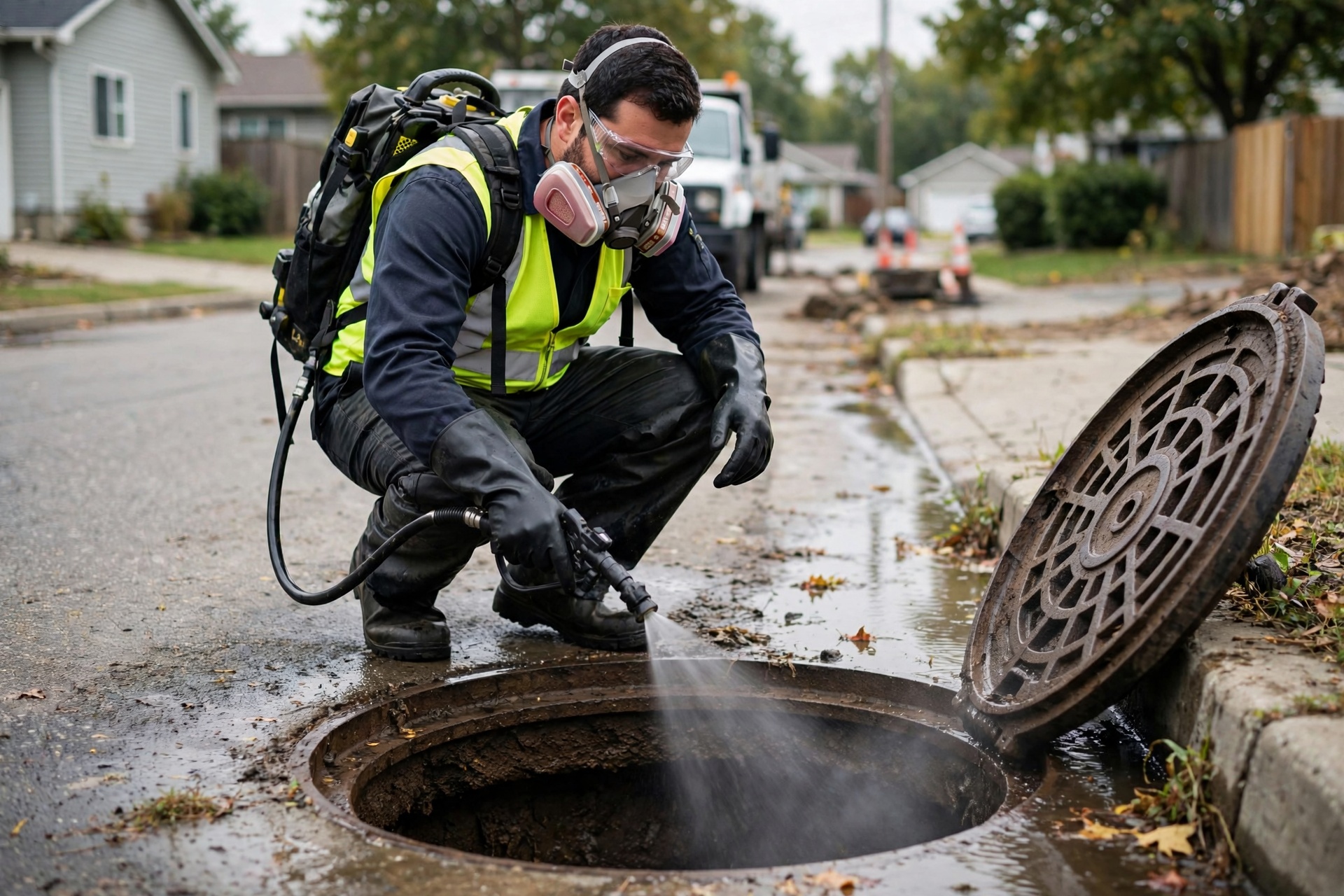
Gratiot Corridor runs along the main commercial spine of Roseville with dense blocks of 1950s and 1960s ranch and Cape Cod homes sitting on narrow lots. When a main line fails or a tree root blocks the sewer, waste backs up fast into basements because the flat Macomb County terrain gives water nowhere to go. Roseville Sewage Cleanup Co reaches these streets from our Common Rd base within minutes, bringing the right pumps and containment for tight driveways and shared side yards that limit larger equipment.
Winter freezes and sudden summer downpours both hit the corridor hard. Frozen ground makes excavation slower while heavy rain overwhelms the aging combined sewers that still serve many blocks between Gratiot Avenue and the Eastpointe border. Our crews know which alleys flood first and where the old clay laterals usually crack, so we can isolate the problem without tearing up the entire yard.
Homeowners along Gratiot often deal with backups that affect both the main floor and finished lower levels because many properties sit slightly below street grade. We focus on fast extraction and drying so the job stays contained to the affected rooms instead of spreading through the small, closely spaced homes typical of this neighborhood.
Around Gratiot Corridor
We regularly work near:
- 📍Gratiot Avenue
- 📍Common Road
- 📍Roseville Civic Center
- 📍Veterans Memorial Park
- 📍Eastpointe border along Gratiot
Sewage Cleanup in Gratiot Corridor — Local Notes
- •Narrow 40- to 50-foot lots along Gratiot Avenue and Common Road limit where we can stage trucks, so we often work from the street and run shorter hoses to reach rear cleanouts.
- •Many homes here still have original clay or Orangeburg pipe that cracks when tree roots from the corridor's older maples push in during Macomb County's freeze-thaw cycles.
- •Flat drainage means sewage from a backup on one block can affect the next street over when heavy rain hits, requiring us to check neighboring laterals before we finish.
- •Winter jobs require breaking through frozen soil and dealing with ice inside the lines, which adds time compared with the same call in Warren or Sterling Heights during warmer months.