2026-10-19 ·
Complete Guide to Sewage extraction and removal in Roseville, Michigan
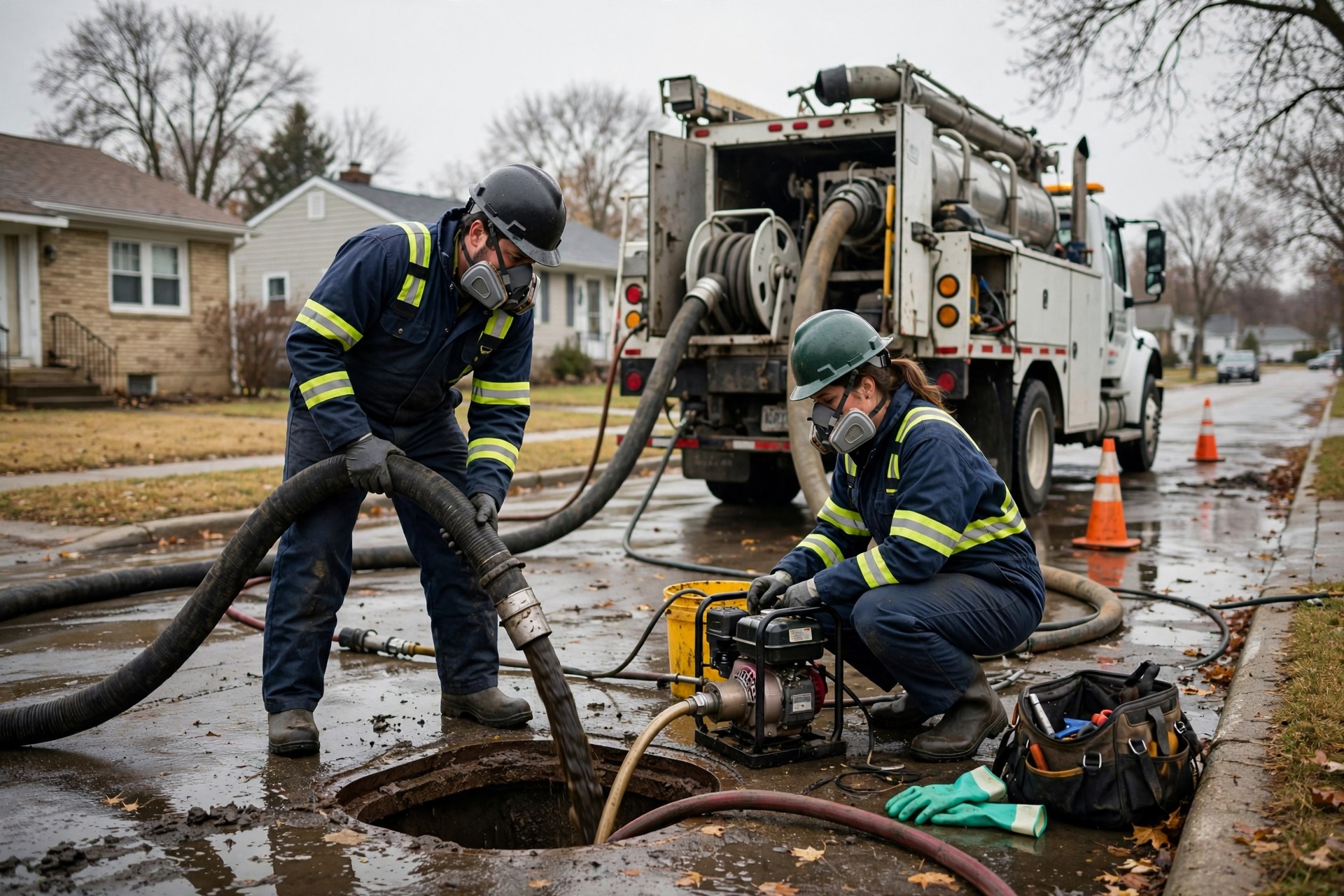
Sewage extraction and removal in Roseville, Michigan starts with rapid pump-out of standing wastewater using truck-mounted vacuums rated for 500+ gallons per minute, followed by targeted removal of contaminated solids from basements and crawl spaces common in the area's mid-century housing stock.
Causes of Sewage Backups Specific to Roseville
Roseville sits in Macomb County with housing built mostly between 1950 and 1970, where clay sewer lines frequently crack from ground movement and tree roots along the Eastpointe border area. Cold winters bring freeze-thaw cycles that expand water in pipes near Veterans Memorial Park, while heavy summer rains overwhelm combined systems in Downtown Roseville. Nearby Warren and Sterling Heights share similar aging infrastructure that pushes backups toward lower-lying lots along the Gratiot Corridor. These conditions turn a standard extraction job into one requiring extra time to break up ice or root masses before full removal.
Extraction Equipment and Process Used Locally
Technicians begin by isolating the affected zone with containment barriers, then deploy submersible pumps to lower water levels below floor grade. Solids are shoveled into sealed containers for transport to approved disposal sites outside Macomb County. In the Common Road District, crews often work around finished basements where carpet and drywall must be cut away during extraction to prevent hidden pockets of waste. The process typically takes 4 to 8 hours for an average 1,200-square-foot home before moving to drying equipment.
Impact of Local Climate and Terrain
Roseville's humid continental climate produces rapid snowmelt in early spring that saturates clay soils and drives water into cracked laterals. Flat terrain around the Roseville Civic Center means poor natural drainage, so extraction crews must often trench temporary sumps to pull water away from foundations. Warm summer humidity slows evaporation after removal, requiring dehumidifiers rated for 70-pint daily capacity to reach safe moisture levels. These seasonal patterns dictate that jobs in winter focus on frozen material while summer work emphasizes odor control during extraction.
Follow-Up Removal and Drying Steps
Once bulk sewage is extracted, remaining sludge on concrete slabs is scraped and pressure-washed with containment recovery. Materials too saturated for salvage, such as particleboard cabinets or insulation, are bagged and removed to avoid recontamination. Sewage disinfection and sanitization follows immediately, then structural drying targets hidden cavities in older plaster walls typical of Roseville homes. Readers facing basement issues can review the Complete Guide to Basement sewage cleanup in Roseville, Michigan for deeper drying protocols.
Prevention Measures for Macomb County Homes
Property owners along Frazho Corridor should schedule annual camera inspections of sewer lines before winter to catch root intrusion early. Installing backflow valves at the main cleanout reduces risk during heavy rains common near Eastpointe. For properties near Martin Road District, grading soil away from foundations prevents surface water entry during extraction events. These steps cut repeat calls by addressing the pipe age and drainage realities unique to Roseville rather than generic fixes.