2026-10-19 ·
Complete Guide to Septic backup cleanup in Roseville, Michigan
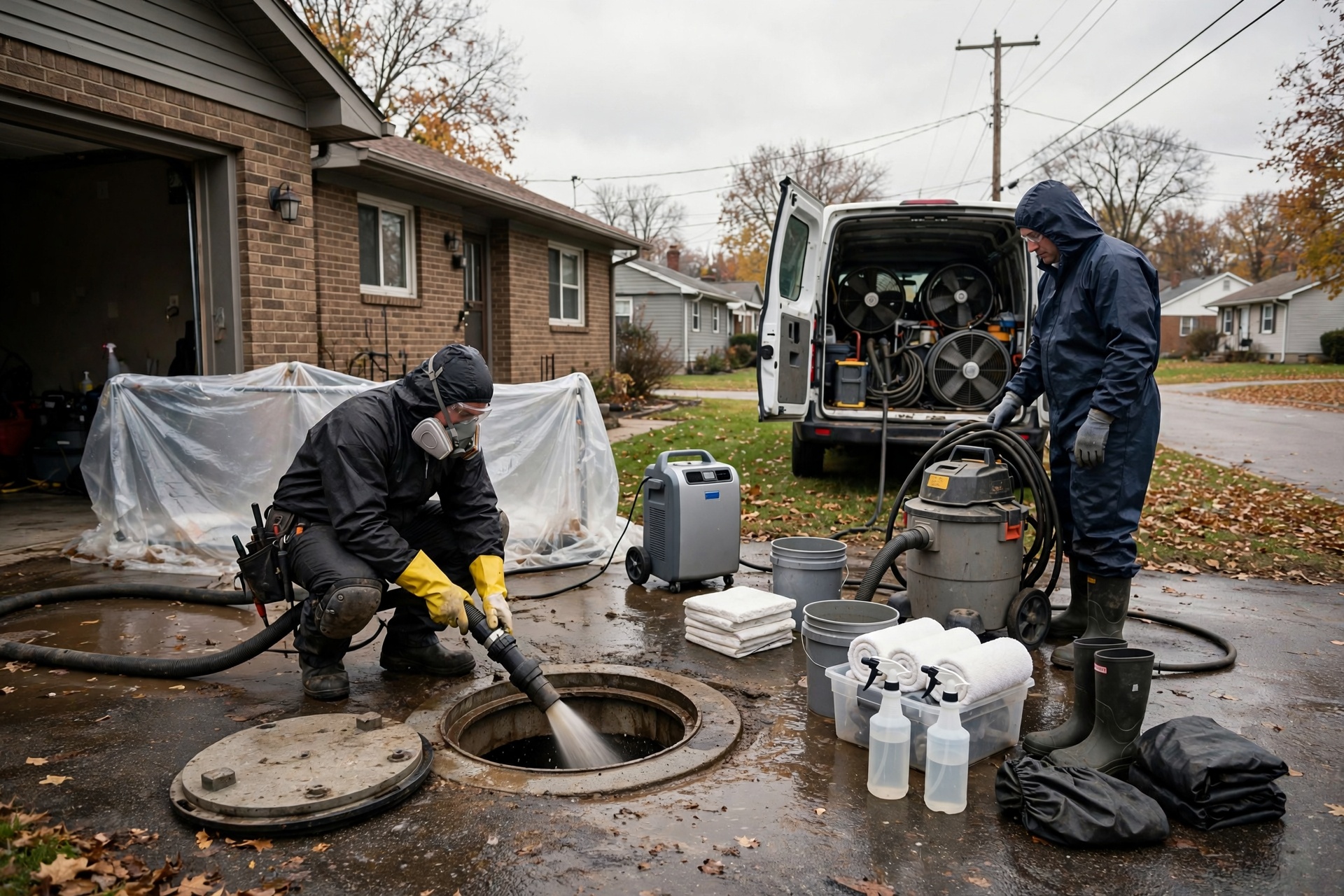
Septic backup cleanup in Roseville typically requires immediate extraction, disinfection, and drying within 24 to 48 hours to limit damage in homes built before 1970. Older housing stock along the Eastpointe border area and near Roseville Civic Center often features clay or cast-iron lines that crack during freeze-thaw cycles common in the humid continental climate.
Common Causes in Macomb County Housing Stock
Roseville homes in Downtown Roseville and the Common Road District frequently sit on older septic or combined systems that struggle with heavy spring rains and winter freezes. Cold temperatures below 20°F can cause soil around tanks to heave, shifting lines and creating blockages that push waste back into basements. Nearby cities like Warren and Sterling Heights share similar glacial till soils that drain slowly, increasing pressure on fields during warm summer humidity spikes. Tree roots from mature maples common along Gratiot Corridor also invade older tanks. These factors turn a simple clog into a full backup faster than in newer subdivisions farther north.
Step-by-Step Septic Backup Cleanup Process
Start by stopping water use and ventilating the space, then extract standing waste using truck-mounted pumps rated for 500 gallons per hour. Next apply EPA-registered disinfectants to all affected surfaces, followed by moisture readings to confirm drywall and subfloors reach under 15% before reconstruction. In Roseville basements near Veterans Memorial Park, crews often remove contaminated carpet padding within the first four hours to prevent mold in the humid summers. Septic backup cleanup crews document every layer removed so insurance adjusters see clear scope. After extraction, sewage disinfection and sanitization follows to address bacteria levels that spike in standing water left for more than a day.
Health Risks Specific to Local Conditions
Raw sewage in a Roseville basement carries pathogens that thrive in the area’s warm, humid summers, raising infection risk for children and pets within hours. Cold winters keep waste frozen longer, but once it thaws the odor and bacteria spread quickly through older, unsealed foundations common east of the Eastpointe border. Residents near 16129 Common Rd have reported respiratory irritation after prolonged exposure because humid air holds particles longer. Professional crews wear full PPE and use negative air machines to keep contaminants from migrating into living areas during the 48-hour drying window typical after a winter backup.
Prevention Steps for Roseville Homeowners
Schedule annual tank pumping before November to avoid winter backups when ground is frozen. Install backflow valves on homes along Frazho Corridor where combined sewers still exist. Keep roof drains and sump pumps directed away from the drain field to reduce saturation during spring thaws. In the Eastpointe border area, replace aging clay lines with PVC during any excavation near the Roseville Civic Center. For deeper guidance on related hazards, see the complete guide to black water cleanup in Roseville, Michigan. These steps reduce emergency calls in the Common Road District where many 1950s-era homes still rely on original septic components.