2026-10-19 ·
Complete Guide to Contaminated material removal in Roseville, Michigan
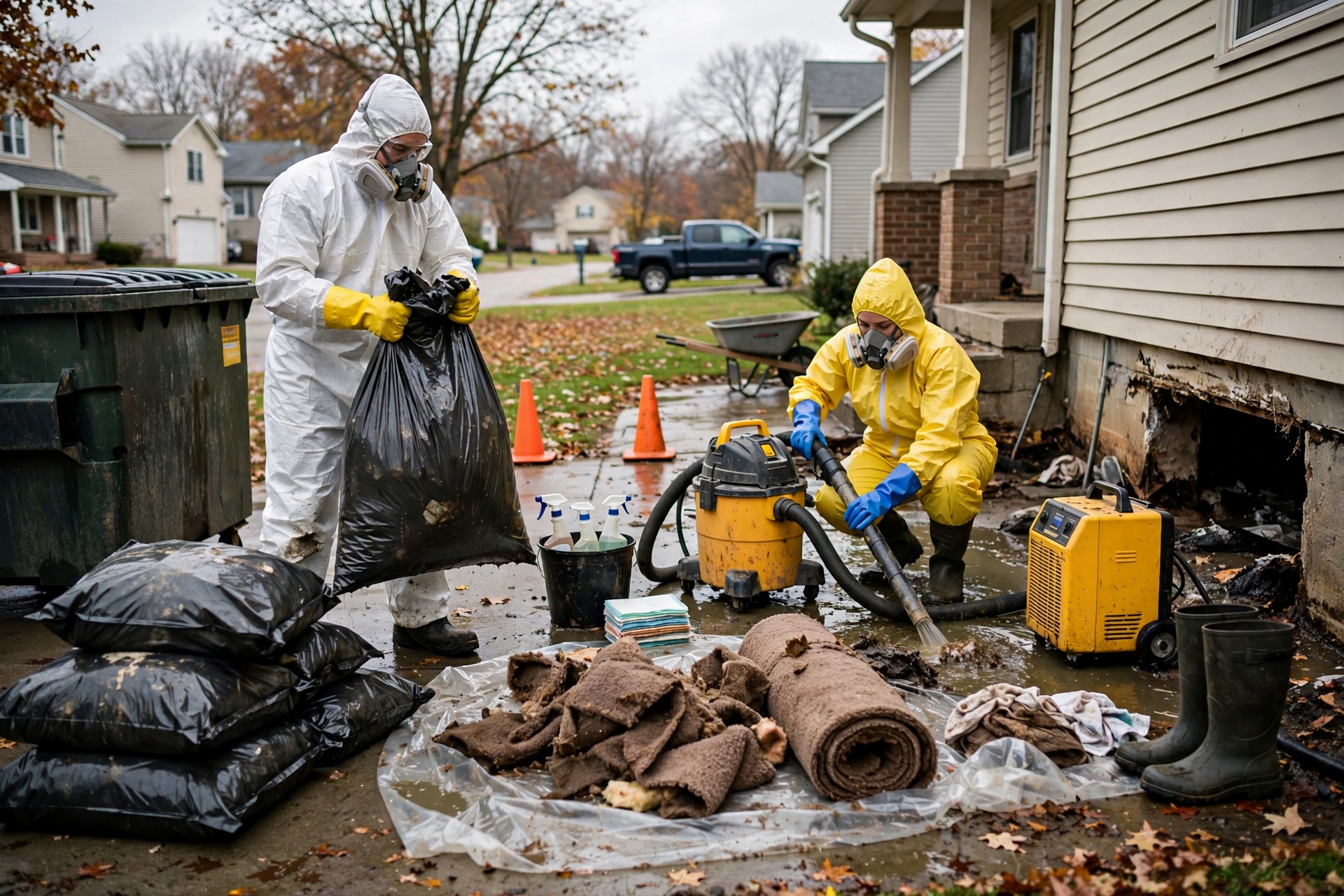
Contaminated material removal in Roseville, Michigan starts with isolating and extracting porous items like carpet, drywall, and insulation that sewage has reached, usually completed in phases over 2–5 days for typical Macomb County residences. Crews begin at the source, often a sewer backup in basements of 1950s–1970s homes common in Downtown Roseville, then move outward to prevent cross-contamination. The humid continental climate brings cold winters that freeze older cast-iron lines along Common Road and warm summers that accelerate bacterial growth in standing water. Properties near the Eastpointe border and Veterans Memorial Park share similar risks from shared sewer lines and flat terrain that holds water after heavy rains. Sewage extraction and removal teams remove solids first, followed by targeted disposal of saturated materials that cannot be salvaged.
Local Conditions That Change the Job in Macomb County
Roseville’s housing stock consists largely of post-war ranches and colonials with clay or cast-iron sewer lines installed before 1980. These lines crack or clog more readily when winter temperatures drop below freezing, sending backups into finished basements near the Roseville Civic Center. Flat lots in the Common Road District and Martin Road District allow water to pool against foundations, forcing crews to remove not only flooring but also lower sections of wallboard up to 24 inches above the water line. Nearby Warren and Sterling Heights share the same glacial till soils that drain slowly, lengthening drying times after extraction. Crews working the Eastpointe border area often encounter combined stormwater and sanitary systems that increase volume during spring thaws, requiring more frequent bag-out of contaminated debris to keep odors from migrating into living spaces.
Step-by-Step Contaminated Material Removal Process
Technicians first establish containment using plastic sheeting and negative air machines to isolate the affected zone. They then cut away and bag carpet pads, baseboards, and any insulation that has wicked sewage, placing materials in sealed containers for transport to licensed disposal sites. Next comes removal of lower drywall and subfloor sections where water has wicked upward, a step that takes longer in homes with multiple layers of flooring added over decades. All removed items receive labels noting the room and date so follow-up disinfection crews know exact boundaries. In properties near Veterans Memorial Park, crews also check crawl spaces under additions, where limited access makes extraction slower. Every load leaves the site the same day to reduce odor complaints from neighbors in dense blocks along Gratiot Corridor.
Health Risks Specific to Roseville Sewage Events
Sewage contains bacteria, viruses, and parasites that remain viable longer in Roseville’s cold winters when temperatures slow evaporation. Homeowners in the Huron Park neighborhood have reported respiratory irritation after disturbing dried residue weeks later. Porous materials absorb these pathogens quickly, which is why removal focuses on discarding rather than cleaning carpet and drywall. Crews wear full PPE and change suits between zones to avoid tracking contaminants into unaffected rooms. After extraction, remaining surfaces receive antimicrobial treatment, but any item that cannot be fully cleaned is removed to eliminate hidden reservoirs. This approach protects families in older Eastpointe-border homes where shared walls can allow odors and microbes to travel between units.
When Homeowners Need Professional Removal Services
DIY attempts often leave hidden pockets of contamination in subfloors or behind cabinets, especially after backups triggered by heavy summer storms. Properties along the Frazho Corridor with finished lower levels require equipment to extract water from under built-in cabinetry without spreading residue. Homeowners notice recurring odors or musty smells near the Roseville Civic Center and realize surface cleaning alone did not address the removed materials. Professional teams coordinate disposal paperwork and can advise on when to involve plumbers for line repairs before restoration begins. Sewage disinfection and sanitization follows removal and pairs naturally with this work. For deeper context on related backups, see the complete guide to sewer backup cleanup in Roseville, Michigan.
Coordination With Restoration After Removal
Once contaminated items leave the site, crews document moisture levels in remaining structural wood and concrete. In Macomb County homes, this often reveals hidden moisture trapped in 2x8 floor joists under kitchens, requiring targeted drying before new flooring installation. Owners in Downtown Roseville frequently schedule removal and drying in one visit to limit disruption during winter when outdoor disposal is more difficult due to frozen ground. Final walkthroughs confirm no visible residue remains and that air scrubbers have run long enough to drop particle counts. This sequence prevents callbacks common when only visible sewage is addressed without full material removal.