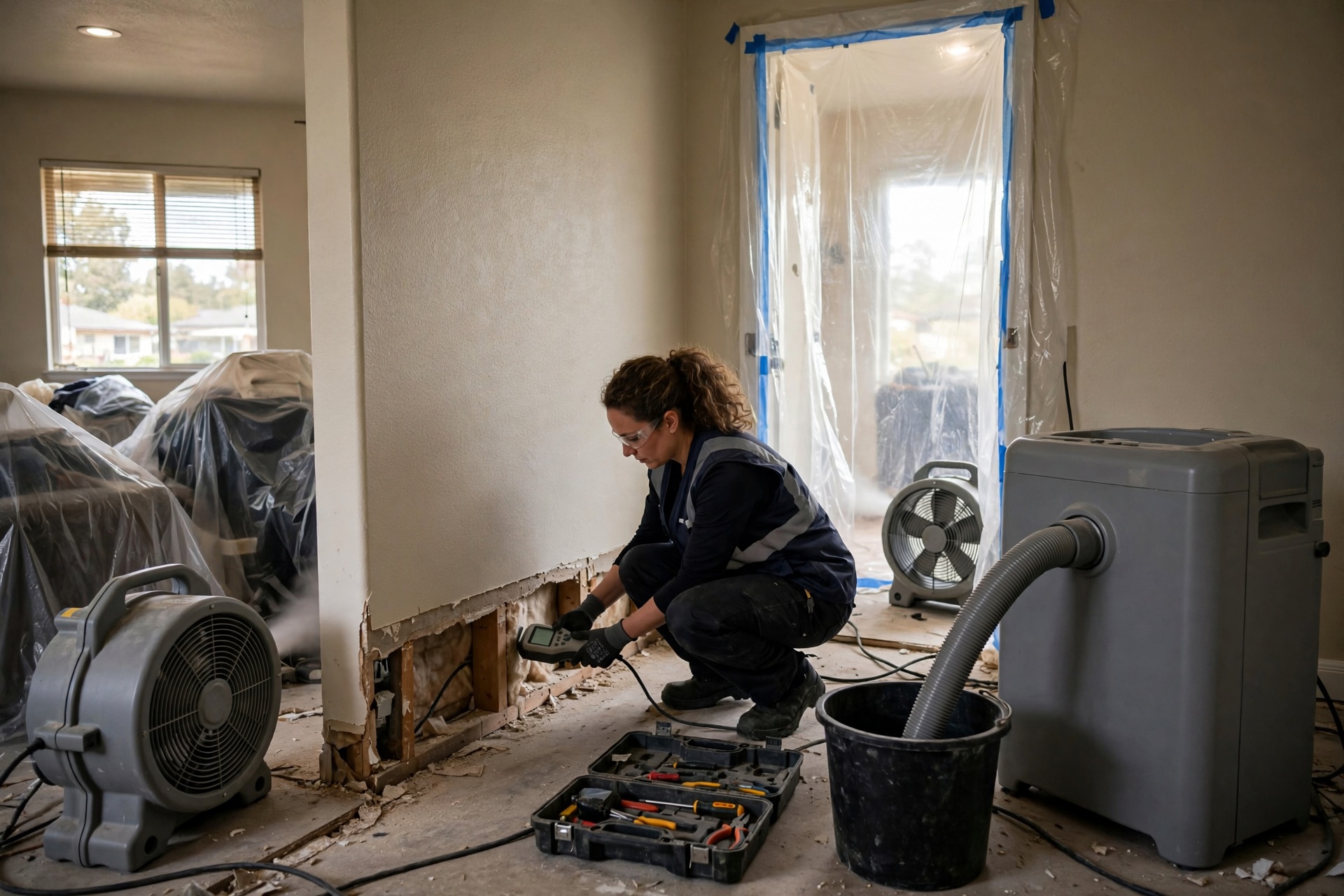
Sewage backups in Roseville often hit older homes near Downtown Roseville and the Eastpointe border where aging pipes and clay-heavy soil allow water to linger under slabs and in crawlspaces. After extraction, structural drying requires industrial air movers and dehumidifiers sized for the home's footprint because humid continental winters keep basements cool and slow evaporation rates even when equipment runs continuously. Technicians check moisture in drywall, subfloors, and insulation daily to prevent hidden mold that thrives when warm summer humidity follows a cold snap.
In Macomb County homes, sewage water frequently migrates into wall cavities and under cabinets because many properties built before modern waterproofing standards lack vapor barriers. Proper drying uses moisture meters and thermal imaging to locate pockets that standard fans miss, then places dehumidifiers to pull humidity below 50 percent. Failure to address these areas can lead to recurring odors and structural rot, especially when snowmelt adds extra groundwater pressure in spring.
Equipment placement matters on Roseville lots with slight slopes toward Veterans Memorial Park where water pools against foundations. Drying times extend when outdoor temperatures stay below freezing because indoor air holds less moisture for dehumidifiers to remove. Crews adjust airflow patterns around finished basements common in the area and monitor for condensation on cold pipes that can re-wet already dried surfaces.
After sewage events near Warren and Sterling Heights borders, crews often combine drying with antimicrobial rinses on porous materials that cannot be fully dried within 48 hours. This approach protects against bacteria that survive in damp cavities during the region's warm, humid summers when windows stay closed for air conditioning.
Technician insight
In Roseville the thing that catches most people out with structural drying and dehumidification is how cold winter air keeps basements near the Eastpointe border 10 to 15 degrees cooler than the rest of the house, so dehumidifiers pull far less moisture unless we pre-warm the space first.
Eastpointe Border Basement
Sewage backup from an aging sewer line entered a basement near the Eastpointe border during a winter thaw. We found elevated moisture trapped behind paneling and under the slab. Targeted air movers and low-grain dehumidifiers ran for five days while outdoor temperatures stayed below freezing. The structure reached safe moisture levels without secondary mold growth.
Structural Drying and Dehumidification Services We Offer
✓Basement Structural Drying
Removes standing and trapped moisture from concrete floors and walls after sewage backups common in older Roseville basements.
✓Wall Cavity Dehumidification
Targets hidden moisture inside partition walls using specialized injectors and monitors to stop mold in Eastpointe border homes.
✓Subfloor Drying After Sewage
Dries plywood and joists beneath finished flooring where sewage water migrates through cracks in Macomb County slabs.
✓Post-Sewage Air Mover Placement
Positions high-velocity fans for even airflow across affected rooms without spreading contaminants to unaffected areas.
✓Moisture Monitoring Service
Daily meter readings and documentation track drying progress until levels match unaffected areas of the home.
Structural Drying and Dehumidification Cost in Roseville, MI
| Service | Typical Range | What Affects It |
|---|---|---|
| Standard basement drying package | $900–$2,200 | Size of area and number of days equipment runs |
| Wall cavity drying add-on | $350–$750 | Number of walls and access points needed |
| Daily equipment rental extension | $150–$300 per day | Weather delays from cold Macomb County winters |
| Moisture monitoring only | $200–$450 | Follow-up visits after initial drying |
Pricing confirmed on-site before work begins. Call 24/7 for immediate dispatch.
How it works
- 1
Initial Assessment
Technicians arrive within hours, map moisture with meters, and identify affected materials in the specific Roseville layout.
- 2
Water Extraction
Remove free water from floors and cavities before drying begins to shorten overall time in cold-weather conditions.
- 3
Equipment Setup
Place air movers, dehumidifiers, and injectors based on home construction and current outdoor temperatures.
- 4
Daily Monitoring
Check readings and adjust equipment until moisture content returns to normal for the building materials.
- 5
Final Clearance
Confirm all areas meet dry standards and remove equipment once the structure is stable.
Pricing
Pricing varies by square footage affected, duration needed, and whether hidden cavities require extra equipment.