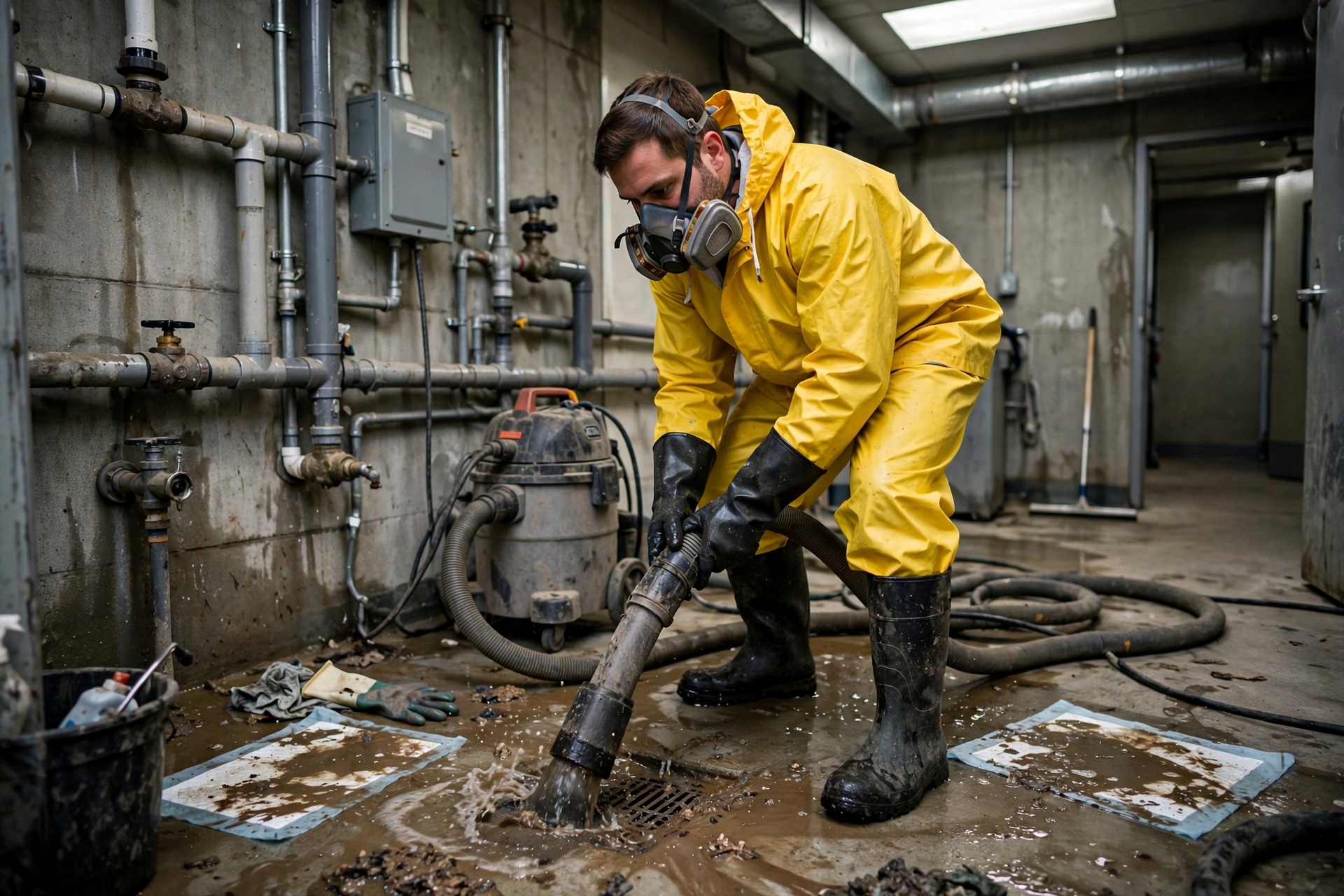
Commercial properties in Downtown Roseville and along the Eastpointe border often sit in buildings from the 1950s and 1960s with clay or cast-iron lines that crack when winter temperatures drop below freezing. Once a backup reaches floor drains in restaurants or retail spaces, the humid continental summers accelerate bacterial growth on porous concrete slabs common in Macomb County storefronts. Crews must separate gray water from black water quickly because nearby storm drains feeding into the Clinton River watershed carry strict county discharge rules.
Veterans Memorial Park and the Roseville Civic Center area see heavy foot traffic that complicates containment when sewage surfaces in adjacent parking lots. Technicians use air movers sized for high-ceiling retail bays rather than residential fans, and they track moisture in block walls that retain water longer than drywall. Failure to address hidden saturation in these older masonry structures leads to recurring odors weeks after the initial event.
Sterling Heights and Warren commercial corridors share the same glacial till soil that slows drainage after heavy spring rains, pushing backups into lower-level storage areas. On-site decisions about disposal routing and temporary bypass pumping keep jobs moving without shutting down neighboring businesses for days. Every project ends with a written clearance report that documents removal volumes and disposal sites for insurance and local health inspectors.
Technician insight
In Roseville the thing that catches most people out with commercial sewage cleanup is the way 1960s-era clay lines under Downtown sidewalks shift every winter, sending backups into neighboring units you would never expect from the original source.
Grease trap backup at Eastpointe border restaurant
A kitchen floor drain backed up into the dining area after a cold snap froze an aging line. We found grease and sewage had traveled under the slab into the adjacent retail space. Extraction and targeted drying prevented odor migration into the shared parking lot near the border.
Commercial Sewage Cleanup Services We Offer
✓Restaurant Grease Trap Overflow Cleanup
Remove and dispose of grease-laden sewage from kitchen floors and drains while keeping health department compliance records for Macomb County food-service locations.
✓Retail Store Sump Pump Failure Response
Extract standing sewage from basement stockrooms and sales floors in older Downtown Roseville retail buildings after sump pump outages during spring thaws.
✓Office Building Drain Line Backup Removal
Clear and sanitize sewage that has entered restrooms and utility rooms in multi-tenant offices near Veterans Memorial Park without disrupting daytime operations.
✓Medical Office Contamination Control
Isolate and remove biohazard sewage from exam rooms and waiting areas while following stricter disposal protocols required for Eastpointe border medical tenants.
✓Warehouse Floor Drain Spill Extraction
Pump and haul contaminated water from industrial floor drains in Sterling Heights and Warren warehouse districts after heavy rain or line collapse.
Commercial Sewage Cleanup Cost in Roseville, MI
| Service | Typical Range | What Affects It |
|---|---|---|
| Initial commercial assessment | $250–$450 | Higher when multiple tenants or night access required |
| Sewage extraction per 1,000 sq ft | $800–$1,600 | Varies with standing water depth and disposal distance |
| Sanitization and drying | $600–$1,200 | Longer run times needed in older masonry walls |
| Final clearance documentation | $150–$300 | Required for insurance and Macomb County health review |
Pricing confirmed on-site before work begins. Call 24/7 for immediate dispatch.
How it works
- 1
Site Assessment
Technician inspects all affected drains, checks for hidden moisture in walls and slabs, and notes proximity to storm sewers near the Eastpointe border.
- 2
Containment Setup
Barriers and negative air are placed to keep sewage from migrating into customer areas or neighboring units in multi-tenant Roseville buildings.
- 3
Extraction and Disposal
Pumps remove standing water, then waste is hauled to approved Macomb County facilities while bypass lines keep essential business functions running.
- 4
Sanitization and Drying
EPA-registered disinfectants treat surfaces, followed by commercial drying equipment monitored until moisture readings meet clearance standards.
Pricing
Commercial jobs are quoted after an on-site visit; factors include square footage affected, depth of contamination, and after-hours timing.