2026-10-19 ·
Complete Guide to Sewage odor removal in Roseville, Michigan
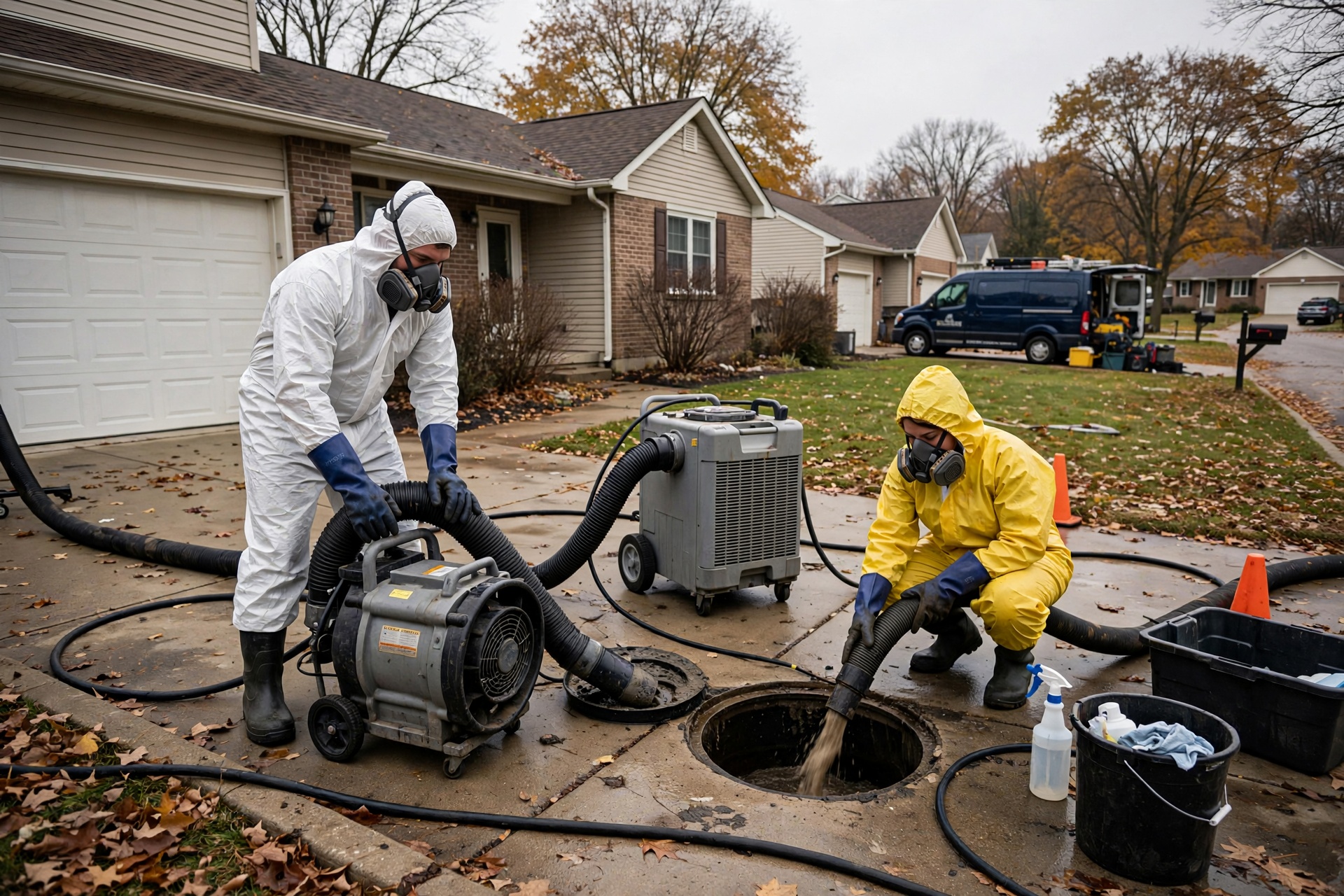
Sewage odor removal in Roseville typically requires targeted extraction, disinfection, and drying that takes 3–7 days depending on the spill size and affected materials. Homes built before 1970 in Downtown Roseville and the Eastpointe border area often have older cast-iron pipes that crack during freeze-thaw cycles, allowing odors to travel through basements and crawl spaces. The humid continental climate brings cold winters that push groundwater higher in Macomb County, increasing backup frequency near Veterans Memorial Park and the Roseville Civic Center.
Common Causes of Persistent Sewage Odors
Sewage odors in Roseville frequently stem from backups triggered by heavy spring rains or snowmelt that overwhelm aging sewer lines in neighborhoods like the Common Road District. Older ranch-style homes and split-levels common along Gratiot Corridor retain moisture in concrete slabs, allowing bacteria to produce hydrogen sulfide long after visible water is gone. Properties near Warren and Sterling Heights share similar soil conditions where clay-heavy ground slows natural drainage and keeps odors trapped indoors. Warm summer humidity then reactivates dormant smells in wall cavities and under flooring.
Step-by-Step Sewage Odor Removal Process
Begin with full sewage extraction and removal to eliminate standing waste, followed immediately by contaminated material removal of soaked drywall, carpet, and insulation. Next apply sewage disinfection and sanitization using EPA-registered agents on all hard surfaces, then move to structural drying and dehumidification with commercial air movers and dehumidifiers set to 40–50% relative humidity. In Roseville’s older homes, technicians often need to remove baseboards and drill vent holes in subfloors to reach trapped moisture behind cabinets. Final odor neutralization uses activated charcoal and ozone generators only after moisture readings drop below 15%.
Residents in the Frazho Corridor and Martin Road District should expect extra time for odor removal when backups occur during winter because frozen ground limits equipment access and slows drying. Always test for hidden moisture with moisture meters in multiple rooms rather than relying on smell alone.
Local Factors That Affect Odor Removal Success
Macomb County’s freeze-thaw cycles expand and contract pipes under streets near the Roseville Civic Center, creating recurring leaks that reintroduce odors months later. Homes bordering Eastpointe often share sewer laterals, so one property’s backup can affect neighbors and require coordinated extraction. Warm summers accelerate mold growth on any remaining organic residue, which is why structural drying and dehumidification must continue until wood moisture content reads under 12%.
For a complete overview of handling sudden backups, see the related guide on emergency sewage cleanup in Roseville, Michigan. Properties along Common Road may also benefit from reviewing structural drying and dehumidification in Roseville, Michigan after the initial cleanup phase.
Preventing Odor Return in Roseville Homes
Schedule annual sewer camera inspections for homes over 40 years old, especially those near Veterans Memorial Park where tree roots commonly invade lines. Install backflow preventers on floor drains and maintain sump pumps with battery backups to handle heavy rains. After any sewage event, keep indoor humidity below 55% year-round using whole-house dehumidifiers suited to Macomb County’s variable weather. These steps reduce the chance of odors returning within the same season.