2026-10-19 ·
Complete Guide to Commercial sewage cleanup in Roseville, Michigan
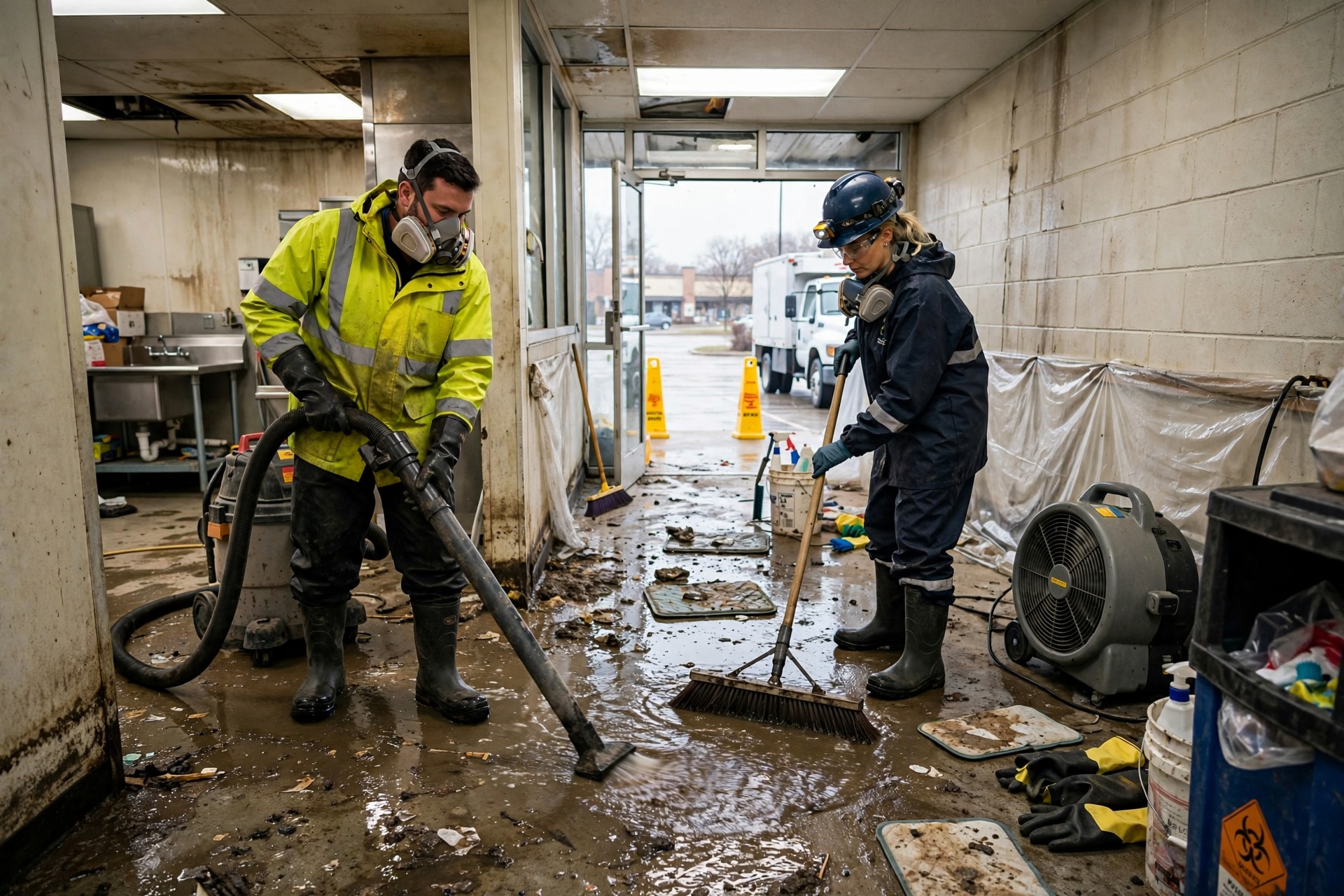
Commercial sewage cleanup in Roseville, Michigan often begins with rapid extraction within the first 24 hours to limit structural damage in buildings constructed between the 1950s and 1970s. Businesses along Common Road and near the Roseville Civic Center face higher risks because clay sewer lines from that era crack under freeze-thaw cycles common in the humid continental climate. Crews start by isolating the affected zone, removing standing water with truck-mounted pumps, then applying EPA-registered disinfectants to surfaces that may contact employees or customers.
Local Factors Affecting Commercial Sewage Cleanup in Roseville
Roseville sits in Macomb County where many commercial properties border Eastpointe and Warren, sharing aging municipal lines that back up during heavy spring rains or when snowmelt overwhelms combined sewers. Buildings near Veterans Memorial Park and Downtown Roseville frequently have slab-on-grade foundations with limited cleanout access, forcing technicians to cut access points through concrete floors. Cold winters drop temperatures below freezing for weeks, expanding water in cast-iron pipes until they split, while warm summers increase bacterial growth rates inside standing sewage. These conditions mean crews must account for frozen ground that slows excavation and higher humidity that extends drying times by several days compared with drier climates.
Common Causes of Sewage Backups in Macomb County Businesses
Tree roots from mature maples along Gratiot Corridor invade lateral lines serving strip malls and offices. Grease accumulation from restaurants in the Eastpointe border area hardens inside 4-inch pipes during cold snaps, creating blockages that push waste back through floor drains. Older toilet and sink traps in structures built before 1975 also fail when paper products combine with low-flow fixtures installed during later renovations. Businesses in the Common Road District report more incidents after major storms because stormwater infiltrates cracked clay mains shared with Sterling Heights and Warren. Each of these triggers requires different extraction volumes and sanitization protocols.
Step-by-Step Process for Commercial Sewage Cleanup
Technicians first shut off water and electricity to prevent further contamination, then use moisture meters to map how far effluent has wicked into drywall and subfloors. Next they extract liquid waste with 500-gallon recovery units and remove saturated carpet, baseboards, and insulation for off-site disposal. Antimicrobial fogging follows, targeting porous materials that cannot be discarded. Air movers and dehumidifiers run for 48 to 72 hours to bring moisture below 15 percent, after which final swab testing confirms bacterial counts meet Michigan health standards. Throughout the process, crews document every step with photos for insurance adjusters handling claims from properties near the Frazho Corridor.
Health Risks and Containment Measures
Raw sewage carries pathogens including E. coli and norovirus that remain viable on surfaces for days in Roseville’s humid summers. Commercial spaces must remain closed until negative air machines and HEPA filtration reduce airborne particles below detectable levels. Workers wear Tyvek suits and respirators when removing contaminated drywall from restrooms or utility rooms in multi-tenant buildings. Post-cleanup verification includes ATP testing on high-touch areas such as door handles and countertops to protect both employees and the public visiting the Roseville Civic Center district.
Prevention Strategies for Roseville Commercial Properties
Schedule annual camera inspections of sewer laterals before winter to catch root intrusion early. Install backflow preventers on floor drains in restaurants along Martin Road District where grease loads are highest. Replace aging cast-iron sections with PVC during tenant improvements to reduce future fracture risk from freeze-thaw cycles. Keep maintenance logs of grease trap pumping and line jetting so property managers can spot recurring issues before they affect neighboring suites in the Common Road District. These steps lower the frequency of after-hours calls to 24/7 emergency teams based at 16129 Common Rd.